
Monday, February 10, 2020


Friday, July 5, 2019
Sunday, February 10, 2019
Sunday, November 4, 2018
Sunday, February 5, 2017
Monday, February 1, 2016
You Need To Vent (Or Do you)?

Like
so many hoodlums wearing hoodies in the 'hood, many commercial
cooking devices masquerade as ventless appliances.
In breathless whispers, their marketers try to hoodwink us into believing that all are altruistic Robin Hoods - removing effluent from the bad air and giving forth good air ("just follow the blue arrows on the diagrams").
An exhaustive search of the available technologies would yield relatively few that truly could be classified as a ventless cooking apparatus in the first place. Many perform the heating function, rethermalizing pre-cooked foods with conducted energy, microwaves, steam and the like. Others can finish par-cooked products - melting, toasting, and/or caramelizing.
Typically only electric-powered equipment with their lack of attendant products of combustion can respire comfortably in this space. Grease-laden vapors, effluent, odors, particulate and condensate all must be mitigated through mechanical means. Mandatory too, fire suppression must be addressed. Catalytic converters, charcoal and specialty filters, precipitators, ionizers, et al provide the mojo "under the hood" of many of these modern marvels.
Now, take a deep breath: duct-season is over.
Certain mini combi ovens use a blend of the above technologies to provide bona-fide ventless primary cooking, allowing operators to prepare a varied menu including whole muscle proteins (from raw to finish)!
Deep fryers with mechanisms that automatically dispense product are self-contained, with fire suppression and extensive filtration on-board .
Slow cookers such as cook and hold ovens and water circulators for sous vide (due primarily to the low temperatures involved) require little attention to ventilation issues.
OK, now exhale a sigh of relief, from Hood Brook ME to Mt. Hood OR, you can find opportunities for ventless commercial kitchens. Now I'm exhausted.
In breathless whispers, their marketers try to hoodwink us into believing that all are altruistic Robin Hoods - removing effluent from the bad air and giving forth good air ("just follow the blue arrows on the diagrams").
An exhaustive search of the available technologies would yield relatively few that truly could be classified as a ventless cooking apparatus in the first place. Many perform the heating function, rethermalizing pre-cooked foods with conducted energy, microwaves, steam and the like. Others can finish par-cooked products - melting, toasting, and/or caramelizing.
Typically only electric-powered equipment with their lack of attendant products of combustion can respire comfortably in this space. Grease-laden vapors, effluent, odors, particulate and condensate all must be mitigated through mechanical means. Mandatory too, fire suppression must be addressed. Catalytic converters, charcoal and specialty filters, precipitators, ionizers, et al provide the mojo "under the hood" of many of these modern marvels.
Now, take a deep breath: duct-season is over.
Certain mini combi ovens use a blend of the above technologies to provide bona-fide ventless primary cooking, allowing operators to prepare a varied menu including whole muscle proteins (from raw to finish)!
Deep fryers with mechanisms that automatically dispense product are self-contained, with fire suppression and extensive filtration on-board .
Slow cookers such as cook and hold ovens and water circulators for sous vide (due primarily to the low temperatures involved) require little attention to ventilation issues.
OK, now exhale a sigh of relief, from Hood Brook ME to Mt. Hood OR, you can find opportunities for ventless commercial kitchens. Now I'm exhausted.
Sunday, November 1, 2015
🎃 A Frightening Visit 🎃
The haunted hayride from the airport to our first
appointment led me to be believe that everything the sales mangler needed to
know was learned by trick-or-treating.

From his inappropriate costume, to his empty tote, he was ill-prepared
for the horrors that awaited him at the dealerships.
Our pumpkin-headed protagonist had one goal in mind: to
procure treats (purchase orders). He
would not stand for accepting tricks (service issues).
Of all of the witches, Frankensteins, mummies and ghouls,
perhaps the scariest of all of the apparitions coming to town is the
werewolf. You remember him don’t
you? No, not Jack (O’Lantern, we’re
talking about the fellow who morphs from one creature when with you, and into
another one when in front of a customer).
Why do we continue to drink the same Kool-Ade each year and
expect different results?
The time has come for a new strategy: pre-plan the dreaded
territory visit!
A few key questions answered in advance could eliminate the
horrifying confusion and fear.
Who, what, when, where, and why? Establishing the logistics before the
bewitching hour could go a long way in successfully navigating the bell-ringing
before the neighborhood curfew is up.
Will there be training?
What collaterals are needed? Is there a new product to be focused on?
Any particular geographic area or customer class that needs attention? Who’s making the lodging and entertainment
reservations? Are there any skeletons in
the closet?
Having ironed out all of the particulars beforehand will go
a long way in setting priorities and expectations on everyone’s parts. Measuring the results against those
pre-established goals represent the essential tools for gauging the success of
a field excursion.
Accepting candy from strangers is only advisable one day per
year. Actively managing your
relationships should not be an ongoing nightmare.

Friday, May 1, 2015
Sunday, April 26, 2015
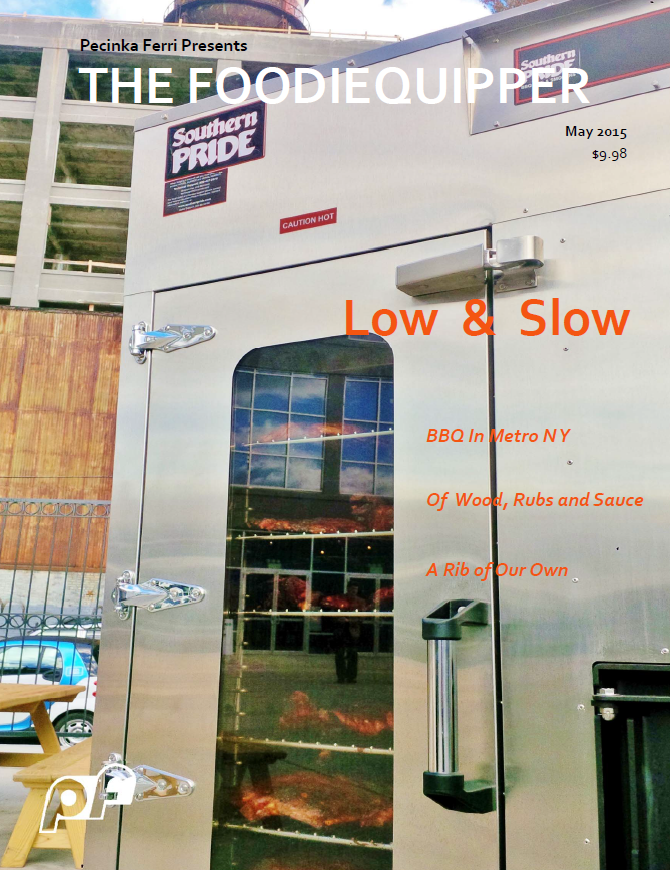
The FoodieQuipper May 2015
They said that you couldn't do BBQ in NYC. Watch what happens when Brisket meets Brooklyn.

Monday, April 6, 2015
Monday, March 9, 2015
Sunday, December 7, 2014
Until Somebody Sells Something
Why do salespeople make the most money? Why does the wait staff get all of the tips? Why
do stockbrokers make a commission whether the security goes up or down, whether
you’re buying or selling?
Simply put, because rainmakers make rain! They, like the hunter & the fisherman,
bring home the catch that will sustain the enterprise.
Those who invent, produce, manage, account, etc. are always
at odds with Sales & Marketing. Although these business functions are vital
to any endeavor, they don’t generate revenue.
At best, they can control costs, typically they increase them.

A business’ lifeblood is its sales. Nothing happens until somebody sells
something!
The sales profession continues to be vilified in these
United States. It is sometimes
justifiably ridiculed, but more often than not, the lampooning is committed out
of jealously and/or misunderstanding.
We are continually reminded by popular media that the best
opportunities are those that don’t require “selling”. How ridiculous! Sales is the engine that delivers you (and
your associates) from poverty. It must be the main obsession of everyone in an
organization.

I recall an old sales trainer reminding me that when calling
on potential clients, if you are not
selling something, then you are just a commercial visitor. Get into the revenue stream and find your
fortune.
Marketing is akin to broadcasting, while sales is more
closely aligned with narrowcasting – it’s personal. Salespeople are tasked with finding out what
people want and then helping them to get it.
It is amazing to me that customer service personnel (back at headquarters)
are so often ignorant of the herculean efforts put forth in the pursuit of a
sale, believing instead that the steady influx of orders somehow magically
appears on the fax or email.
Given the current marketplace
generational shift - the greying of the baby boomers - we are due to experience
a lack of qualified sales and marketing professionals. Very few Gen-X’ers are in
the profession, and a certain lack of appeal to Millennials almost guarantees a
paucity in their ranks as well.
The disruptive influence of
e-commerce is often cited as the salvation of an enterprise’s top line. This can be true in more commoditized offerings. For high value, intricate, system sales,
solution sales, luxury items, and a plethora of other categories, people still
want to buy from people. Relationships
matter.
Networking is at the core of the modern sales profession,
and social media is now taking a leading role in customer “touches”. This bodes well for future generations of
digital natives.
If properly trained, anyone can do it! Success in selling is open to every
personality type, ethnic group, gender, and whatever other subcategory of folks
that you can conjure.

Like mercenaries, hired guns,
and pro athletes, a sales team’s loyalties reside with their current offering. That loyalty can only be sustained by the maintenance
of an ethical proposition.
Besides the lucrative nature of the endeavor, a sense of pride
and achievement permeates any successful sales operation, due to the satisfying
of the needs of clients.
So, defend sales and
marketing, befriend sales and marketing, and hug a salesman today. Your next paycheck depends upon somebody
selling something.

Saturday, October 18, 2014
Sunday, October 12, 2014
When is a Chef’s Knife Not a Screwdriver?

Rolling-pin-tenderizer-users aside, who’s responsible for (not) training people this way?
I won’t mention the patently dangerous, like frialators next to open flames. (Well, OK I did mention it.) No, I ‘m talking more about the mundane dangers such as bartenders who fill glasses by dipping them into ice instead of using a scoop, or wait-staff who put their fingers into glassware to carry multiples.
It seems that a chef’s knife is viewed by kitchen staff as though it is a substitute for its Swiss Army cousin – doubling as saw, screw driver, bottle and can opener, hammer, and yes even fingernail cleaner. YUCK! I suppose this creates job security for grinding services.
China caps become impromptu fryer oil filters. Bamboo skewers are mini torches to light pilots. Fry pans double as pot lids, meat tenderizers, and sizzle platters. Tongs are everything else that the chef’s knife can’t be.
Char broilers being used as stock pot ranges will eventually warp under the concentrated heat. Refrigerated merchandisers, intended (by the bottling companies that supplied them for free) to be used in the FOH for sealed products, can’t keep up with the rigorous demands of the BOH environment. Walk-ins designed as storage boxes, when used as extemporaneous blast chillers, put the stored product at risk by raising the box temperature and keeping everything in the danger zone longer.
Knives shoved in the filthy cracks between appliances, dupe racks hung by string, equipment on extension cords, vegetables prepped in pot sinks, soiled bus-tubs used to transport clean wares, oven doors and refrigerated drawers used as step ladders create hazardous, dangerous and unsanitary conditions.
Ice bins hijacked as personal “refrigerated storage” by staff, products from home stored in the cooler, out-of-service heated or refrigerated drawers used for stashing personal items all detract from the professionalism of the establishment and are code violations.
I’ve seen wire rack shelving used as bunk beds in the dry storage room. Bourdain speaks of flour sacks used as mattresses (but not for sleeping). I charitably spare you the details of the “stock pot as rodent exterminator” story.
A site survey can serve as a stark reminder of the human propensity to violate the spirit and the intent of the design of the equipment and/or the facility. Foodservice equipment and supplies professionals should always consider the “Murphy’s Law” of commercial kitchens: anything that can be used wrong, will be.
http://www.pecinkaferri.com
Saturday, March 24, 2012
Wadda YOU Call It?
A spider is, in and of itself, an unusual thing to deliberately add to a foodservice establishment. What bugs me is when there are several different “species” on the menu…
Spiders, Spatulas and Speed racks, oh my! What images do they convey? If you’re a baker, (AKA a “Dough Hoe”) they might conjure up visions of the fryer skimmers, icing knives and sheet pan racks. A restaurateur could easily imagine them as table bases, burger turners and liquor bottle holders.
Another critter that creeps into most commercial kitchens is the salamander. The historical one, which originally looked like a metal peel, doesn’t at all resemble the unit that might be a cheese-melter on steroids, or could be a steak-house broiler on a break.
And speaking of peels, can you distinguish between a make-up and take-out? Aren’t they really a shovel and/or a spatula?
The dough scraper is also a pan scraper, bench scraper, and even a dough divider (although that term may lead us to the mechanical Promised Land).
Does a china cap ever appear in an Asian kitchen? And what makes a chinoise different from it? I’m straining here, as I’ve become enmeshed in a fine point.
I’m also wracking my brain trying to distinguish amongst the various wire-rack shelves, bun-pan racks (or are they trolleys?), pot racks, speed racks, wine racks, baker’s racks, raconteurs and racketeers that have been known to rack up hours in foodservice kitchens. If you’re looking for a drying rack, look no further than an icing grate for a bun pan (sheet pan).
I’ve often tried to take a pass on the window by referring to it as a double over-shelf on the chef’s – er, front – line. The cooking – er, back - line should never be confused with the cook’s line which may or may not be a prep-line.
The multitude of traditions present in our modern foodservice environments illustrates the millennia of cross-pollinations in food preparation and serving. We shouldn’t be surprised that many common items will have different names, as their usage and ethnic etymology would dictate. It is also clear that the diversity of cuisines has spawned the convergence of terminology in this polyglot environment.
From classical French terms, to the lingua franca of whichever immigrant ethnic group is currently manning the back–of-the-house, we’ve developed a rich and colorful vernacular in foodservice.
Let’s celebrate the diversity of our culinary melting pot. Or was that a sauce-pan?
Saturday, March 3, 2012
Grill Me
The story you are about to read is true. The names have been changed to project the innovative.
It was February 27, 2012; we were working the night watch on the barbecue detail. My partner's Eddy Pitco. My name is Fry-Day. Grill Sergeant Joe Fry-Day. It was 2:06 PM when we got a call from a cook in distress. She needed help with a problem. A cooking problem.
"I need a Char-Broiler."
"Uh-huh."
"A 4 foot char-broiler."
3: 58 PM, Eddy and I drove over to the restaurant and we talked to the owner. We intended to grill her over why she wanted a char-broiler.
"Grill Sergeant?"
"Yes, ma'am?"
"What's the source of the smoky flavor from a char broiler?"
"Just the fats, ma'am."
Considered one of the most flavorful ways of cooking, grilling can be done indoors or out. There are many choices in grilling equipment. The char-grill (not to be confused with "grille", an architectural term) can be gas, solid fuel, or some combination of these. Electric is not prevalent in the commercial world.
Mistakenly referred to as "barbecues" in the northeast, and also known as "under-fired broilers" (due to the location of the heat source), these units are anything but under-fired! They are hot, hot, hot. There are several options to make them hotter still. Cast iron components, and higher Btu input equate with more heat to better sear the food and seal in its juices.
A bed of ceramic or lava rocks is typically laid out under the grilling surface, while the open flames are directed up from below. The stones are there to absorb and burn off the grease and drippings from the food. Metal bar stock, known as "radiants" alternatively take the place of the stones. A popular consumer brand calls these "flavorizer bars", due to the fact that they act in lieu of the rocks in creating the smoke that enthusiasts crave in grilled food.
Although burgers remain a contender for the most frequently char-broiled item, up-and-comers now include vegetables, whole fish, seafood, and of course the perennial favorite, steaks.
Connoisseurs will specify the size of the grill marks, a function of the rods or casting making up the cooking surface, and the spacing between them. Narrow spacing is preferred for fish and other delicate items. Chrome or cast iron are two other available options for the grids.
Heat can be harnessed from underneath the char broiler as well, with optional slide-out racks performing as bun toasters.
We humans have been grilling meats for approximately ½ million years. Cook-outs were popular even in classical times. Currently, controversy over the formation of certain compounds in the smoke competes with the claims of the health benefits of cooking with less shortening.
"Grill Sergeant?"
"Yes, ma'am?"
Can I install a char-broiler under my hood?
"That's right ma'am, only if it is executed in the manner prescribed by law"
How not to Grill
www.pecinkaferri.com
Saturday, February 25, 2012
Dysfunctional Discounts

Once upon a time in a land far, far away, there lived the enchanted Queen of the Foodservice Rebates. One day, a plan was hatched to reward all of the brave knights of the realm (AKA dealer principals) for swearing their fealty to her - and to the factories that were part of her Buying Group Empire. If the knights would exclusively (well, most of the time) be pure of heart and not wander away from these factories for purchase and sale of equipment and supplies, they would, in addition to the plunder that they were accumulating during the year, be paid handsomely (rebated) at year end. They all lived happily ever after.
This, of course, is a fractured fairy tale. In the E&S business, group purchasing has created a culture that relies almost solely on sheltered income for profits. We have, in fact, wandered far into the enchanted forest of less than exclusive deals. Back in the mists of time, the various buying groups once touted mutual benefits for producers and distributors alike. The producers got guaranteed payments in exchange for allegiance to the brand offerings within the construct. The distributors got limited distribution in exchange for their fiscal prudence.
The enchanted Queen used her charms to convince all of the Cinderella dealers that they could compete at the ball with their larger and better capitalized ugly step-sisters. This self-fulfilling prophecy came true, much to the dismay of all involved. Be careful when you wish upon a star – you just might get what you wished for. Artificially leveling the playing field has spawned many incongruities.
Many believe that if they don’t sell at (or below) cost, that someone else will. Specifications are written based upon BG affiliations which ill-serve the end-user.
Slaying the E-commerce dragon also became a cause célèbre. “Fill the moat with MAP (minimum advertised pricing) and MPP (minimum purchase pricing) dictates so that no-one can undercut us” cried the townsfolk. If only they knew what Pogo did: “We have met the enemy and he is us.”
We, in the foodservice equipment and supplies biz live in a fantasy world where demons and ogres are lurking around every corner. The true enemy is not our trading partner; it is a lack of fiscal discipline. This is the same force that causes countless folks to rely on tax refunds as a forced savings plan – without accruing any interest or benefit!
Most business people would never give an interest free one year loan to anyone. Yet that is what our dealers and distributors do every day. They unsustainably sell at or close to net in order to drive volume, hoping that profits will eventually be realized at year-end in the form of a rebate. Unless all conditions are met, the payout is not even guaranteed.
We’ve all created this situation where sheltered income is the only profits that we see. Now we all need some magic to solve it together.
· Factories must not absorb the freight costs on single unit shipments.
· Drop shipments from factories should be handled at a different discount rate than stock orders.
· Dealers must commit to training their sales staffs to compete on value rather than strictly on price.
· Local stock of E&S has to be encouraged.
· Prohibit reps and regional managers from facilitating the poaching of business outside of their marketing areas.
· MAP and MPP should be strictly enforced where they are in place.
We can turn the tide on profit erosion, and in turn better serve our ultimate customers.
The truth is that there are no villains here. No monsters, no ogres, no wicked queens, just a legendary industry trying to survive and emerge stronger.
Tuesday, February 14, 2012
Making Succesful Concessions
Making Succesful Concessions

Is it an impulse or a compulsion that makes you want to eat that soft pretzel? Or is it simply the tangy mustard pumped onto it? Displayed food must look its best when laid out for speed and convenience, even for captive audiences at arenas, stadiums and outdoor entertainment venues.
No matter whether concession fare is pretzels, hot dogs, popcorn or other fun foods, items must be held at the proper temperatures and the point of sale lighting should accentuate rather than detract from them. We’d rather look at the food than see the equipment that is holding it. People eat with their eyes first.
Menu board photos can only go so far to whet customers’ appetites and drive demand. An interesting exception to this exists in subway stations in South Korea. There, whole grocery stores are represented graphically and commuters can shop virtually via QR code readers on their cell phones. Here in the States, however, we prefer a less virtual experience during our grazing rituals.
Specialized equipment, such as roller grills, popcorn makers, cotton candy machines, hot food display cabinets and cup and condiment dispensers, along with its selection and layout, plays a key role in maximizing the limited space available in most concession environments.
Panini presses have made the leap “across the pond,” along with gyro machines, orange juice squeezers, cappuccino makers and gelato cases, adding an ethnic flair to even the tiniest of service points.
Hot fudge pumps can push out that tantalizing hot chocolaty goo through heated spouts; cup dispensers can speed service at busy stations. Heated merchandising cabinets, designed to keep foods warm, moist and appealing throughout service periods, help to cut down on waste and drive sales. Grills, fryers, equipment stands, soft serve machines and re-thermalizers all function to speed up the service of concession stands’ tasty treats to waiting (hopefully not too long) fans, concert goers and fair attendees. Napkin, straw and PC organizers function to keep counters neat and clean (able). Although the business opportunities are typically short and/or seasonal, concession stand snack bars can be a lucrative endeavor for owners and operators, and provide convenient pit stops for consumers.
With the possible exception of parkland venues, healthful and sustainable meal options have not been the norm at these grab ‘n go venues. However, salad bar selections, cup and/or frozen yogurt, soups and stews can often all be easily added to the offerings to please today’s more discriminating consumers. Savvy operators will also look to offer whole grain products to satisfy their more health-conscious customers.
Foodservice operators have come to expect big profits from small concession stands. Foodservice equipment and supplies professionals should work to create a seasonal bump in their sales when such stands open up each year.
Appeared in TSRMag

Tuesday, December 20, 2011
MORE POWER, MORE POWER
In our “supersize me” culture, the natural inclination to more-is-better ill-serves us in commercial kitchen equipment purchasing choices. When it comes to gas cooking appliances, btu’s and recovery figures are akin to the horsepower and torque numbers in automobile selection. You need both, and more of each is generally more better, if your volume requirements dictate it.
Years ago, I was asked to cost justify food service equipment’s value based on a cost per pound of the appliance. This was as invalid a measure of its worth as is a simple measure of the btu load is.
The rest of the story is that with modern equipment, engineers have been able of late to squeeze more efficiencies out of every btu input. This is important because it requires less fuel to cook the same the amount of food, and where’s there’s greater fuel efficiency, there’s also lower flue temperatures and the resultant lower air handling (hood and HVAC) requirements. These combined, of course, will contribute to a greener footprint and lower overall costs, and greater throughput in the kitchen with less real estate and asset usage.
Many of the latest technological advances rely on simple recirculation of the products of combustion, re-firing them and/or using heat exchangers to maximize the potential energy contained within. This is something that Ben Franklin was attempting to popularize with his famous Franklin Stove. Other innovations contributing to productivity gains in commercial appliances center on technology. Better and more accurate controls with narrower differentials (the band of temperature between cycle on and cycle off) keep the equipment closer to the cooking temperature setting. In addition, the latest models will have lower “burner on” times, even at lower btu’s! Having the appliance at-the-ready equates to faster recoveries and more production capacity for fuel (and fuel dollars) spent.
Energy Star designations can be a good place to begin understanding the efficiency of commercial food service equipment. In many instances, rebate dollars from local utilities are available to more than offset the slightly higher initial cost of energy efficient units.
Like most areas in life, this is a pay me now or pay me later scenario. The total cost of ownership should always be considered, and right now the equation is happily slanted towards better-producing equipment and away from commodity (read “cheap”) purchases. Don’t let btu input be your only judge of appliance capacity.
As Founding Father and stove engineer Ben Franklin said: “The bitterness of poor quality remains long after the sweetness of low price is forgotten”.
Sunday, December 18, 2011
Disconnections
Have you ever noticed that technology can sometimes impede progress? I recall back in the 80’s, when banks were first implementing their electronic marvels, that the queues seemed to be getting longer and moving slower.
In foodservice we’ve computerized our equipment, added e-commerce, reservations on-line, IPad wine lists, installed turbo-cookers, combi’s, and blast chillers, POS, and dupe printers, and we are still having the same old problems of getting the food out, at temperature, in a timely fashion. What gives?
There’s a disconnect between the kitchen and the front of the house. There’s a disconnect between the E&S specialist and the chef. With all of the sundry modern means of communications available, we do little real communicating.
Good business (AKA “selling”) is simply finding out what somebody wants and helping them to get it. Whether you’re a waitron or a DSR it’s all the same process, and it is noble. In foodservice, and in the greater sphere of the hospitality industry, we are all engaged in satisfying our client’s needs. That is why there’s no such term as “standard” in what we do. We can no more shoe-horn a flight-type dishmachine into a luncheonette than can you expect to get chateaubriand at a bowling alley.
Listening to our patrons is only the beginning; hearing what the other person is actually saying is the often neglected critical component. Countless hours spent networking will be wasted if we haven’t fostered relationships with the folks that we’ve met. People buy from people, as the sales adage goes. We must embrace technology, but not for technology’s sake.
Who among us hasn’t worked a tradeshow with attendees and vendors avoiding eye-contact? Have you noticed any service staff hiding from and ignoring dining patrons? Are you aware of any suppliers that assume that they know what you need before asking any questions and listening to the answers? We can’t afford to hide behind our computer terminals, emailing and texting all day long.
Connecting with our clients, co-workers and suppliers is paramount. Technology can greatly assist in (or hinder) the effort. SocMed sites keep us in touch with those that are important to us. POS systems can quickly communicate patron’s desires. Smart phones can rolodex everyone you’ve ever encountered. The real challenge then is to create a meaningful dialogue with the folks that matter most in our lives.
The restaurentrepreneur who reconnects the various players will reap the rewards. The supplier who constantly learns from his clients will have his efforts pay dividends.
Connecting with people is what good hospitality is all about. Occasionally disconnecting from our electronic devices might be a good place to start.
Subscribe to:
Posts (Atom)