
Friday, May 1, 2015


Sunday, April 26, 2015
The FoodieQuipper May 2015
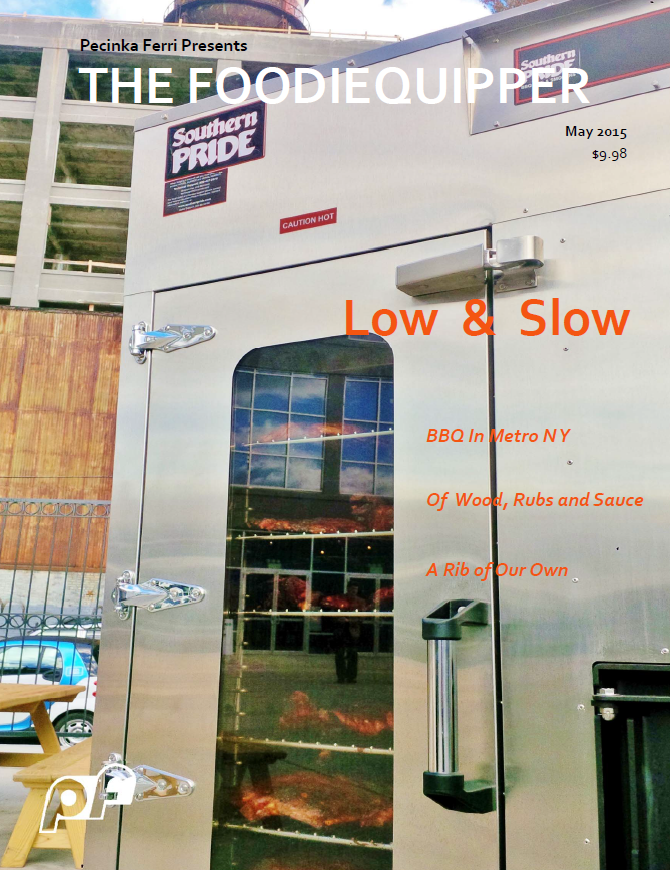
They said that you couldn't do BBQ in NYC. Watch what happens when Brisket meets Brooklyn.

Monday, April 6, 2015
Monday, March 9, 2015
Sunday, December 7, 2014
Until Somebody Sells Something
Why do salespeople make the most money? Why does the wait staff get all of the tips? Why
do stockbrokers make a commission whether the security goes up or down, whether
you’re buying or selling?
Simply put, because rainmakers make rain! They, like the hunter & the fisherman,
bring home the catch that will sustain the enterprise.
Those who invent, produce, manage, account, etc. are always
at odds with Sales & Marketing. Although these business functions are vital
to any endeavor, they don’t generate revenue.
At best, they can control costs, typically they increase them.

A business’ lifeblood is its sales. Nothing happens until somebody sells
something!
The sales profession continues to be vilified in these
United States. It is sometimes
justifiably ridiculed, but more often than not, the lampooning is committed out
of jealously and/or misunderstanding.
We are continually reminded by popular media that the best
opportunities are those that don’t require “selling”. How ridiculous! Sales is the engine that delivers you (and
your associates) from poverty. It must be the main obsession of everyone in an
organization.

I recall an old sales trainer reminding me that when calling
on potential clients, if you are not
selling something, then you are just a commercial visitor. Get into the revenue stream and find your
fortune.
Marketing is akin to broadcasting, while sales is more
closely aligned with narrowcasting – it’s personal. Salespeople are tasked with finding out what
people want and then helping them to get it.
It is amazing to me that customer service personnel (back at headquarters)
are so often ignorant of the herculean efforts put forth in the pursuit of a
sale, believing instead that the steady influx of orders somehow magically
appears on the fax or email.
Given the current marketplace
generational shift - the greying of the baby boomers - we are due to experience
a lack of qualified sales and marketing professionals. Very few Gen-X’ers are in
the profession, and a certain lack of appeal to Millennials almost guarantees a
paucity in their ranks as well.
The disruptive influence of
e-commerce is often cited as the salvation of an enterprise’s top line. This can be true in more commoditized offerings. For high value, intricate, system sales,
solution sales, luxury items, and a plethora of other categories, people still
want to buy from people. Relationships
matter.
Networking is at the core of the modern sales profession,
and social media is now taking a leading role in customer “touches”. This bodes well for future generations of
digital natives.
If properly trained, anyone can do it! Success in selling is open to every
personality type, ethnic group, gender, and whatever other subcategory of folks
that you can conjure.

Like mercenaries, hired guns,
and pro athletes, a sales team’s loyalties reside with their current offering. That loyalty can only be sustained by the maintenance
of an ethical proposition.
Besides the lucrative nature of the endeavor, a sense of pride
and achievement permeates any successful sales operation, due to the satisfying
of the needs of clients.
So, defend sales and
marketing, befriend sales and marketing, and hug a salesman today. Your next paycheck depends upon somebody
selling something.

Saturday, October 18, 2014
Sunday, October 12, 2014
When is a Chef’s Knife Not a Screwdriver?

Rolling-pin-tenderizer-users aside, who’s responsible for (not) training people this way?
I won’t mention the patently dangerous, like frialators next to open flames. (Well, OK I did mention it.) No, I ‘m talking more about the mundane dangers such as bartenders who fill glasses by dipping them into ice instead of using a scoop, or wait-staff who put their fingers into glassware to carry multiples.
It seems that a chef’s knife is viewed by kitchen staff as though it is a substitute for its Swiss Army cousin – doubling as saw, screw driver, bottle and can opener, hammer, and yes even fingernail cleaner. YUCK! I suppose this creates job security for grinding services.
China caps become impromptu fryer oil filters. Bamboo skewers are mini torches to light pilots. Fry pans double as pot lids, meat tenderizers, and sizzle platters. Tongs are everything else that the chef’s knife can’t be.
Char broilers being used as stock pot ranges will eventually warp under the concentrated heat. Refrigerated merchandisers, intended (by the bottling companies that supplied them for free) to be used in the FOH for sealed products, can’t keep up with the rigorous demands of the BOH environment. Walk-ins designed as storage boxes, when used as extemporaneous blast chillers, put the stored product at risk by raising the box temperature and keeping everything in the danger zone longer.
Knives shoved in the filthy cracks between appliances, dupe racks hung by string, equipment on extension cords, vegetables prepped in pot sinks, soiled bus-tubs used to transport clean wares, oven doors and refrigerated drawers used as step ladders create hazardous, dangerous and unsanitary conditions.
Ice bins hijacked as personal “refrigerated storage” by staff, products from home stored in the cooler, out-of-service heated or refrigerated drawers used for stashing personal items all detract from the professionalism of the establishment and are code violations.
I’ve seen wire rack shelving used as bunk beds in the dry storage room. Bourdain speaks of flour sacks used as mattresses (but not for sleeping). I charitably spare you the details of the “stock pot as rodent exterminator” story.
A site survey can serve as a stark reminder of the human propensity to violate the spirit and the intent of the design of the equipment and/or the facility. Foodservice equipment and supplies professionals should always consider the “Murphy’s Law” of commercial kitchens: anything that can be used wrong, will be.
http://www.pecinkaferri.com
Subscribe to:
Posts (Atom)